
Santa Monica ZIPs: Areas and Notes
Five ZIP codes carry most ordinary geographic delivery work in Santa Monica. The county master table also lists special, PO-box, or unique codes that should not be drawn as six more residential neighborhoods. The table distinguishes a postal construct from a city boundary and keeps the post-office context visible. A ZIP code directory search should preserve the source and date because postal routing can change while a historical record remains fixed.
| ZIP | Areas Covered | Postal Station or Context | Notes |
|---|---|---|---|
| 90401 | Downtown, Civic Center, beachfront, and downtown core | Santa Monica delivery and retail offices | Dense mixed use, multi-unit, and business addresses |
| 90402 | North of Montana and northern Santa Monica; some Pacific Palisades addresses | Santa Monica and Pacific Palisades routing | ZIP crosses the incorporated city line |
| 90403 | Wilshire-Montana and north-central Santa Monica | Santa Monica | Confirm the parcel for jurisdiction |
| 90404 | Mid-City and central/eastern corridor | Santa Monica | Multi-unit and commercial corridors are common |
| 90405 | Ocean Park, Sunset Park, and southern Santa Monica | Santa Monica | Historic place names can matter in older records |
The standard geographic set is 90401 through 90405. ZIP codes 90406 through 90411 have special or PO-box uses in the research material. They can help route mail, but they should not be converted into fictional neighborhoods or a residents directory.
Verify a Santa Monica ZIP With USPS
The USPS ZIP Code Lookup accepts a street address, city and state, or ZIP code and returns standardized delivery information. It answers a postal question. It does not return residents, owners, voters, or parcel boundaries. Start with USPS when a typed address has a spelling, directional, unit, or ZIP mismatch.
The lookup screen is useful because a standardized delivery line can then be compared with the county parcel and the municipal jurisdiction. Do not treat a Santa Monica postal name as proof that the property lies inside Santa Monica. The 90402 overlap is the clearest local example, but any edge address deserves a parcel check.
The official USPS form shows the input path for a delivery-focused ZIP code directory check.
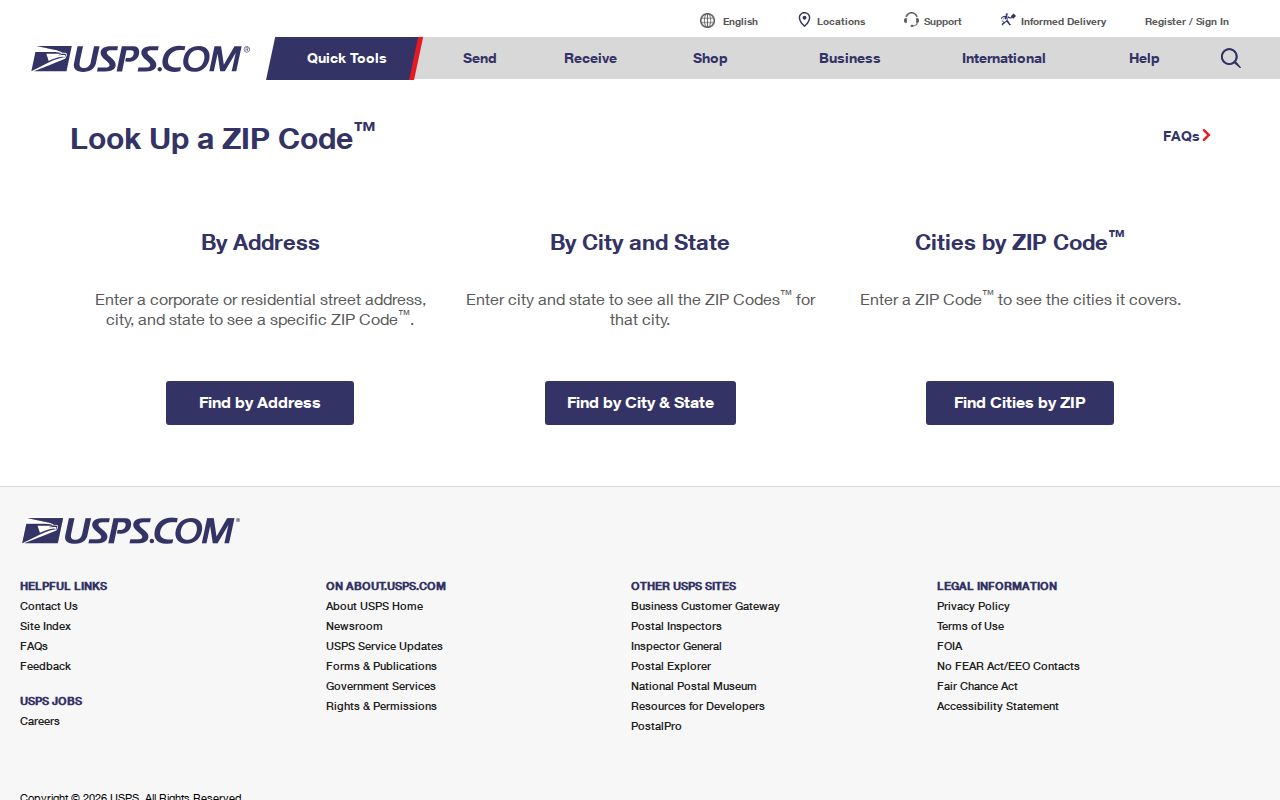
After standardization, carry the exact street and ZIP into the assessor or city parcel tool, then keep the postal and property answers in separate fields.
| Street Address | Enter the delivery line; include a unit where the form accepts one. |
|---|---|
| City and State | Use the postal city and California abbreviation for a city/state lookup. |
| ZIP Code | Use a known five-digit code to check the associated delivery area. |
| Returned Data | Use the standardized postal answer; it is not a people search. |
Why 90402 Crosses Santa Monica's Edge
90402 covers North of Montana and northern Santa Monica, but the county's official master ZIP table also places some Pacific Palisades addresses in the same code. Pacific Palisades is in the City of Los Angeles. This is not a minor map detail. A city permit, city records request, or municipal contact route must follow the parcel's jurisdiction, not the postal label.
When a search begins with a ZIP, compare three answers: USPS tells where mail is routed, the county assessor tells which taxable parcel and AIN are involved, and a city tool tells which municipal records office has authority. The addresses can look alike while the custodians differ. Preserve the raw postal result so a later researcher can see why the question was routed one way.
Local boundary rule. A Santa Monica postal line can describe a parcel outside the incorporated city. Use the AIN and municipal boundary before treating a ZIP result as a Santa Monica record.
Santa Monica's Special ZIP Codes
The research identifies 90406, 90407, 90408, 90409, 90410, and 90411 as special, PO-box, auxiliary, or unique Santa Monica-named codes in postal tables. They are not six additional neighborhood polygons. A PO-box ZIP can be attached to a postal service point rather than a dwelling area. A special-use code can route a record without describing the parcel's location.
For one of these codes, verify the full address through USPS and then look for an underlying parcel only if the question concerns land or municipal jurisdiction. Do not infer a resident's neighborhood from the code alone. A postal route may be the right answer for mail and the wrong answer for a Santa Monica residents directory search.
- ZIP code
- A USPS delivery construct, usually five digits, used to sort and route mail.
- ZIP+4
- An expanded delivery code that narrows a route or group of addresses; it is not a resident list.
- PO-box ZIP
- A code associated with postal boxes or a service point rather than a conventional neighborhood polygon.
- Unique or special ZIP
- A code assigned for a defined postal purpose; verify its use rather than drawing a residential boundary.
- Carrier route
- A delivery sequence inside the postal system, not a property, census, or civic boundary.
Santa Monica ZIP and Parcel Boundaries
A ZIP code directory organizes delivery geography. A city limit identifies municipal authority. A parcel map identifies taxable land and the AIN that links assessment, tax, permit, and deed research. These layers overlap often enough to feel interchangeable, but edge cases and older records expose the difference. Santa Monica's Ocean Park history and 90402's Pacific Palisades overlap make a quick postal inference especially risky.
The durable property key is the AIN and legal description. The durable historical key may be a tract, lot, directory place name, or street guide. The postal key is the ZIP and standardized delivery line. Put all three in notes when following a record across systems, and label which source supplied each field.
| Layer | Best Question | Custodian or Tool | Does Not Prove |
|---|---|---|---|
| USPS ZIP | How is this address routed? | USPS lookup | City jurisdiction or occupant |
| Municipal boundary | Which city handles the record? | City and county parcel context | Mail route or household membership |
| Parcel and AIN | Which taxable lot and legal description? | LA County Assessor and map | Everyone at the address |
| Directory year | Who was listed at that time? | SMPL historical collection | Current presence or complete household |
Find Santa Monica Records by ZIP Code
A ZIP code can narrow a name or address question, but no official portal in the research returns a current resident export by ZIP. Use the code as one filter in a larger workflow. The goal is a dated, source-specific answer rather than a list assembled from unrelated data.
- Standardize the address or confirm the five-digit ZIP through USPS.
- Check the county parcel map and record the AIN, situs, and municipal context.
- Use a specific city, assessor, court, vital, or directory source that matches the question.
- Compare the result with an independent custodian and keep the record date visible.
- Move to the Santa Monica street directory once a ZIP has narrowed the work to a named address or street.
My Voter Status has no ZIP browse, the assessor is not a ZIP-wide people export, and city permits work best by exact street, parcel, or project. A historical directory may include the postal city in a title while covering neighboring communities. That is why a ZIP is a useful starting clue and a poor final identity test.
Santa Monica 90401 Mixed Uses
90401 covers the downtown, Civic Center, beachfront, and dense mixed-use core. A ZIP code directory search here can encounter business addresses, multi-unit buildings, public facilities, and parcel records that do not map neatly to one household. A tax parcel may hold a commercial structure or several units. A city permit may identify a project role. A directory entry may identify a business rather than a private resident.
For a name clue in 90401, keep the record type in the note: business filing, license, court party, directory listing, or parcel owner. For an address clue, add the unit, building, and AIN when available. The ZIP helps group the search but does not resolve the relationship between the person and the site.
Santa Monica 90405 and Ocean Park
90405 includes Ocean Park and Sunset Park in southern Santa Monica. Those names matter in historical records because early directories can treat Ocean Park as its own place, while a modern mailing address may use Santa Monica. The same family or business can appear under different place headings without a clear physical move. Read the directory's front matter and street guide before deciding that two entries conflict.
Pair the ZIP clue with a parcel map, tract or lot description, and the closest directory edition. A 1950 census household, a 1912 directory entry, and a current USPS result are three time layers. They can be compared, but they should never be presented as one simultaneous ZIP record.
Note: Historical community names are evidence about the source's geography, not automatic replacements for today's city and ZIP boundaries.
No Santa Monica ZIP Resident Export
California's voter status service is an identity check, not a ZIP directory. The assessor accepts an address or AIN, not a reliable ZIP-wide people export. The county recorder requires a named party and year rather than a ZIP. Santa Monica permits are address and project records. A historical city directory is tied to an edition and listing practice. These limits are normal and help prevent a ZIP code directory from promising more than the underlying sources can deliver.
For a lawful, personal records question, use a ZIP to reduce geography, then ask the right custodian for the defined record. Keep parcel ownership, directory listing, voter status, court participation, business affiliation, and current presence as separate concepts. When a result is absent, use the city's Records Request Center, the county's manual route, the library shelf, or the relevant state application instead of treating an empty search as proof that nothing exists.
Practical limit. A ZIP code narrows geography; it does not authorize a person list. Verify a name or address through the source that created the record and respect protected information.