
Santa Monica Resident Lookup Records
A Santa Monica name search is a chain of narrow records, not one master list. The assessor can anchor a parcel, the court can show a litigant, a vital record can confirm an event, and a directory can place a listed person at an address in a particular year. Each result needs its own date and access rule.
| Record | What It Confirms | Where to Search | Access |
|---|---|---|---|
| Assessor and tax parcel | AIN, situs, legal description, use, values, and a specific owner lead | LA County Assessor Portal and map | Parcel facts free; owner by specific request |
| Recorded deed | Named grantor, grantee, instrument, and transfer trail | Los Angeles County RR/CC | 1850-present; no open web index; paid request |
| LASC court index | Litigant, case type, filing date, location, and image count | Los Angeles Superior Court Civil Index | Paid search; coverage varies by case type |
| Voter status | Individual registration status and election information | California My Voter Status | Free self-lookup; not a reverse directory |
| Vital record | Birth, death, marriage, dissolution, or family relation | LA RR/CC or California CDPH | Inspection and copy rules apply |
| SMPL city directory | Listed resident or business address in an edition year | Sharla P. Boehm Collection | Selected 1899-1998/99 editions; free viewer and shelf |
| Probate file | Decedent, petitioner, fiduciary, heirs, and case events | Los Angeles Superior Court | Index, clerk, and file access vary |
| Business or license filing | Public entity or professional affiliation | bizfile Online or DCA License Search | Free search; copies or board records vary |
| Unclaimed property | Owner name, locality, and holder clue | California State Controller | Free search and claim process |
Use the record closest to the question. An old address points toward a directory or parcel trail. A court question starts with a case type. A family event needs the correct vital custodian. A public affiliation belongs in a business or license index, not in an assumption about residence.
Santa Monica Resident Lookup Through LASC
Los Angeles Superior Court’s civil name search covers civil, small claims, family law, and probate modes. It is countywide, so a Santa Monica courthouse label is not a substitute for checking the filing location and case type. The online service updates daily, but the electronic display is not the official record.
The Los Angeles Superior Court civil index shows the party-name search surface used for a one-person search.
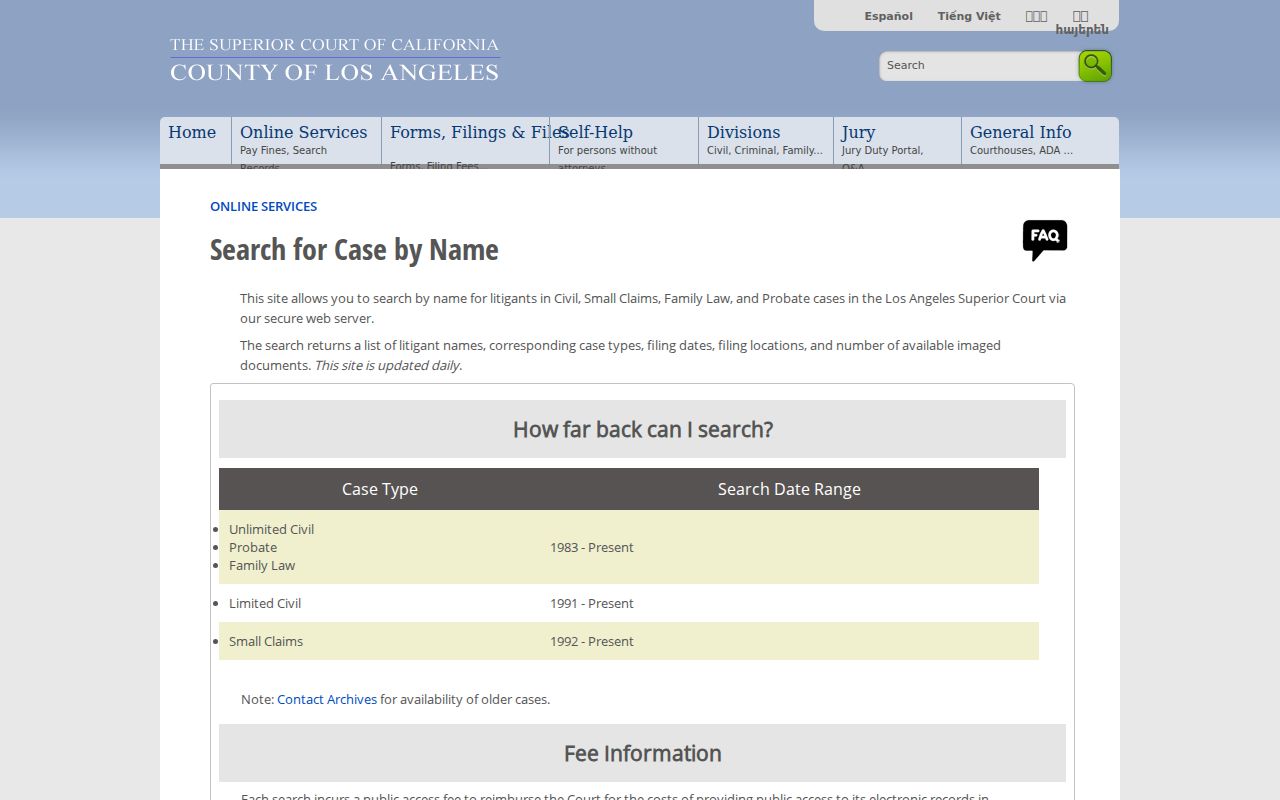
The search screen is a starting index. A clerk, case-number view, register of actions, or document request may be needed for the underlying record.
| Last Name or Business Name | Required text field for the party or entity name. |
|---|---|
| First Name | Conditional field that narrows a natural-person search. |
| Middle Name | Optional field that helps separate same-name parties. |
| Case Type | Civil, Small Claims, Family Law, or Probate. |
| Date Range | Optional, subject to coverage: Unlimited Civil, Probate, and Family 1983-present; Limited Civil 1991-present; Small Claims 1992-present. |
| Search or Purchase | Search control with the fee disclosed before a paid result or document request. |
A result names the litigant, case type, filing date, filing location, and image count. Guest results last two hours; purchased documents last 30 days. Juvenile, sealed, adoption, and restricted portions may be absent. Federal cases go through PACER in the Central District; most documents cost $0.10 per page, capped at $3, with quarterly charges of $30 or less waived.
Confirm a Santa Monica Resident Across Records
Same-name errors are common when a lookup begins with only a surname. Record the exact indexed name, middle initial, suffix, former name, entity role, date, and geography. Then move from a clue to an independent custodian rather than treating two matching names as one person.
- Anchor the name to a known parcel, historical address, directory entry, or other dated clue. Keep situs and mailing address separate.
- Run the LASC party search with the needed case type, first name, middle name, and date range.
- Compare the result against a vital, business, license, probate, or directory record held by a different custodian.
- Check dates, addresses, relatives, entity numbers, roles, and document numbers before combining records.
- Order a certified or complete copy from the originating office when an index entry is not enough.
- Docket
- The court’s running case record, including filings, hearings, orders, and other recorded events.
- Index versus image
- An index summarizes a record; an image is the scanned or filed document and may be paid, redacted, or unavailable.
- Certified copy
- A copy issued or authenticated by the custodian for a purpose that requires official proof.
A deed, directory, court, or license entry does not prove current presence. Identity improves when independent facts agree, not when one database returns more rows.
Santa Monica Vital Records: Two Copy Types
California vital access turns on authorized versus informational copies. Health and Safety Code sections 103525-103526 allow an eligible requester an authorized certified copy; others may generally receive an informational copy that cannot establish identity. Confidential marriage is limited under Family Code section 509, and adoption is sealed under section 9200.
California CDPH lists the statewide process and its 2026 fees at the Vital Records and Vital Records Fees pages.
| Record | 2026 Fee | Access Detail |
|---|---|---|
| Birth certificate | $31 | Authorized or informational copy, depending on eligibility |
| Death certificate | $26 | Copy access and sensitive fields can be limited |
| Marriage certificate | $19 | Public marriage inspection requires a specified record and appointment |
| Dissolution certificate | $18 | Certificate of record is not the divorce judgment |
| Confidential marriage | $19 state schedule | Issuing county and party or court-order eligibility control access |
A county copy suits a known Los Angeles County event; CDPH helps when the California county is unknown. Marriage inspection requires a specified record, appointment, identifying information, and identification, not a random name search.
- Give the record type, names as recorded, event date, and city or county.
- Add parent names for birth or death, or spouse names for marriage and dissolution.
- State requester relationship, copy type, sworn statement or signature, return address, and payment.
- Use the adoption or confidential-marriage process for restricted records; genealogy evidence cannot override sealing.
A certificate of no record means the searched custodian and parameters found nothing. It does not prove that an event never occurred.
Santa Monica Resident Lookup and Voter Status
California’s My Voter Status is a free self-verification service, not a public name or street directory. It asks for first name, last name, date of birth, and the California driver license or identification card last four digits as presented. The result is meant for the voter’s own registration status and election information.
The California My Voter Status lookup shows the identity fields that keep a voter check separate from a casual name search.
Those identity fields are a safeguard, not a way to browse Santa Monica names.
Voter-file access is purpose-qualified under Elections Code section 2194 and 2 CCR sections 19000-19013. Permitted election, scholarly, journalistic, political, or governmental users apply through the state or county, identify the purpose, and follow security rules. Research lists a $30 specific-record fee and a $100 statewide cap. Confidential voters and sensitive license, Social Security, and signature data are withheld.
Santa Monica Resident Heir Search
A legitimate heir search combines probate, title, and obituary evidence. Start with the probate case, then compare the decedent, petitioner, fiduciary, case events, recorded title, and death evidence. Probate petitions can identify estate participants, while the will and filed papers remain subject to Superior Court access rules. Wills belong with the court, not the recorder.
The useful sequence is probate case → deed and legal description → obituary or death evidence → family relationship. Each step narrows a name without turning one result into a claim about a living person. Newspapers, Woodlawn Cemetery, and community archives add context; certified records should settle a disputed date.
For birth-family questions, California adoption records require an authorized court or Department of Social Services process. A public search cannot open a sealed file. Former classmates are better approached through SMPL yearbooks, directories, newspapers, and community archives.
Santa Monica Resident Business Matches
Business and professional indexes can confirm a public affiliation, but an entity or license address is not proof of a person’s home. Search the entity name, person, filing number, board, license type, city, or county, then retrieve the filed statement or board record when it matters.
The California bizfile business search displays the entity lookup used for public company and organization records.
bizfile results can include entity number, status, formation or jurisdiction, addresses, agent for service, and filed statements. Copies can have separate rules.
The California Department of Consumer Affairs license search provides the board and license filters for a professional record.
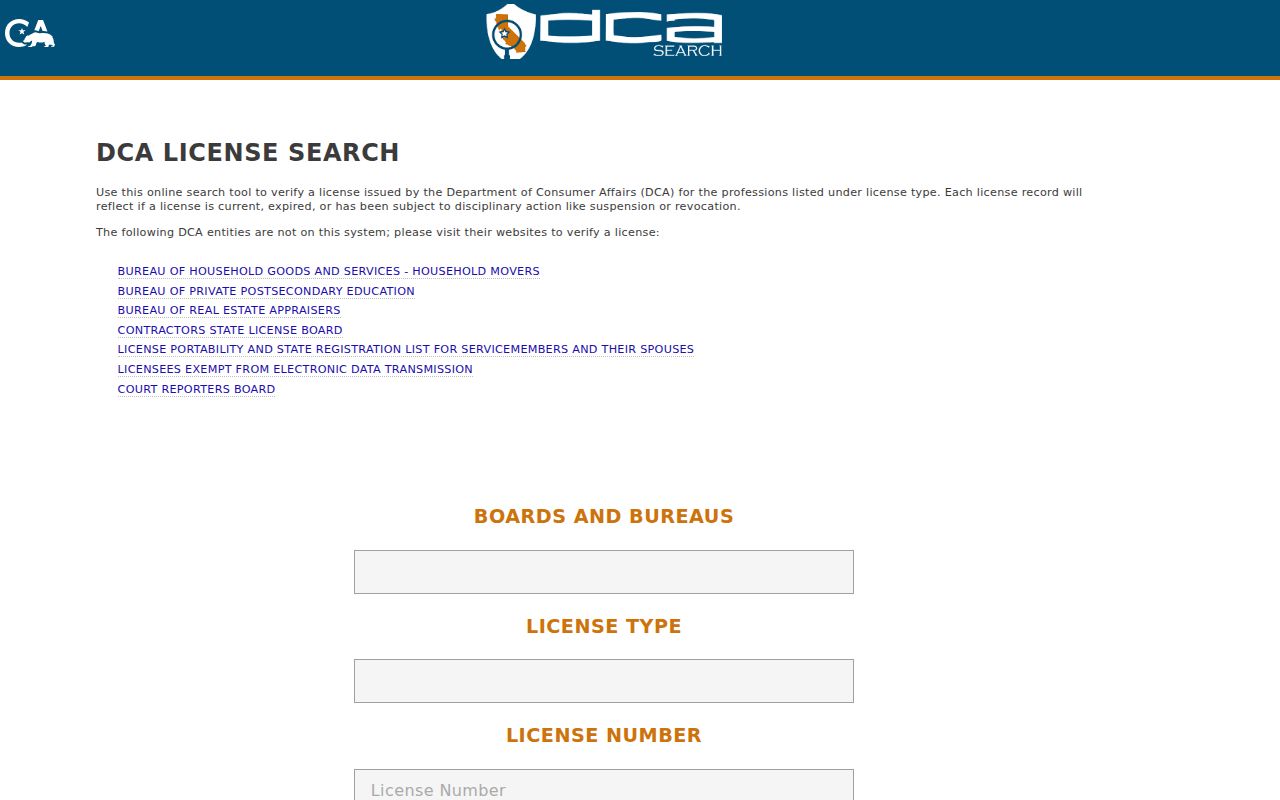
DCA results can show status, issue or expiration, public discipline, and an address of record. Treat both portals as affiliation evidence and verify with dates, geography, or an independent record.
Other Santa Monica Resident Lookup Clues
Several official tools answer narrow questions. The State Controller’s unclaimed property search can return an owner name, locality, and holder clue. The CDCR locator covers state custody, while the LASD Inmate Information Center covers county custody. A custody result is not a conviction or proof of Santa Monica residence.
The California Megan’s Law registry explains the statutory search and use limits for registry information.
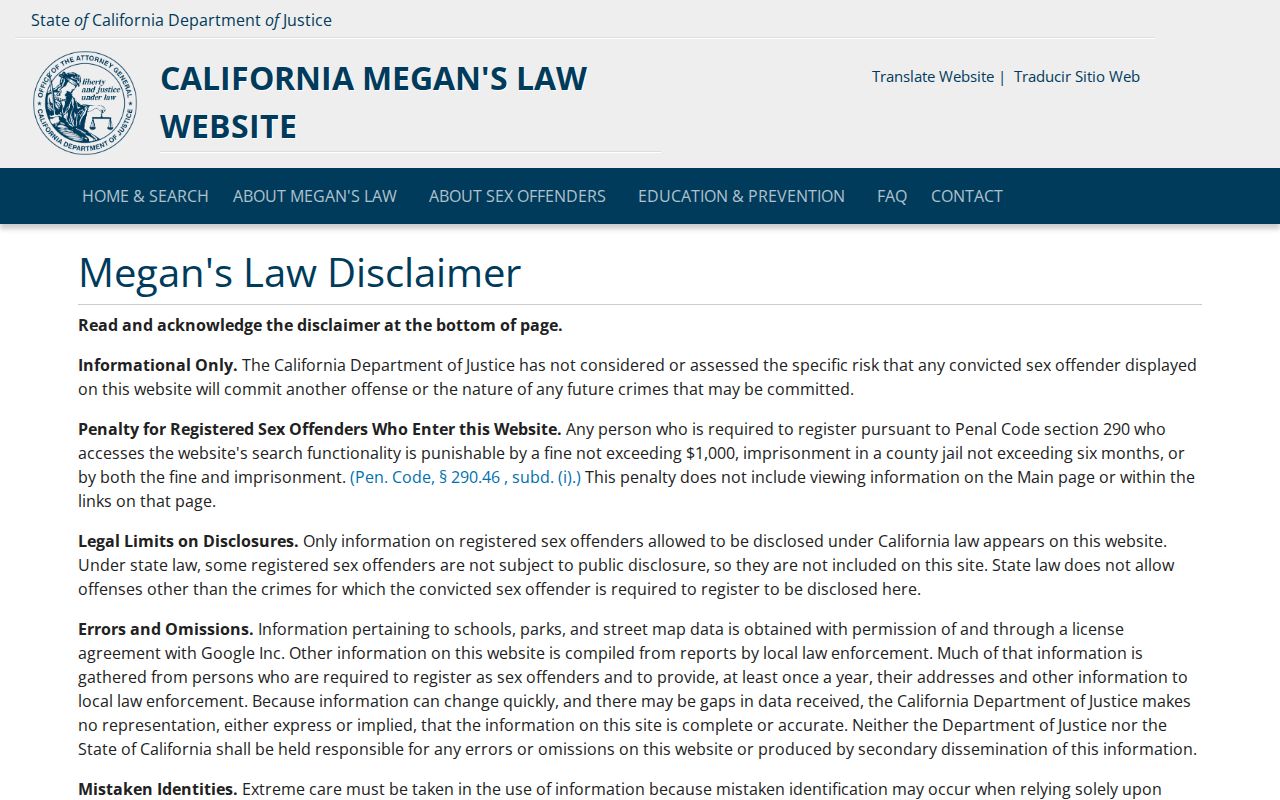
Registry disclosures carry anti-harassment warnings and exclusions. Use the official court record for case disposition, and never treat a narrow registry result as a complete identity profile.
Santa Monica Resident Lookup Requests
Online indexes are only one access channel. A failed search can mean a restricted record, an older series, a missing year, or the wrong custodian. Santa Monica and Los Angeles County each provide a request or counter route for records that do not appear in a public search.
- City records: use the Santa Monica Records Request Center online after account creation, in person, or by mail. The City Clerk at 1685 Main Street, Room 102, can route a focused request; a determination generally comes within ten calendar days, with a possible 14-day extension.
- Property records: obtain the AIN or owner lead through the assessor, then ask RR/CC for a grantor or grantee name and approximate year. The recorder has records from 1850 but no open web index; counter, mail, fax, and paid copy channels remain important.
- Court records: use a public terminal or clerk for case-number access, certified copies, and older files. LASC Archives handles some older matters, while sealed records remain unavailable.
- Historical records: ask SMPL staff for an undigitized directory year or reverse section. The historical Santa Monica city directory collection is the handoff when a current search becomes family history.
CPRA requests identify existing, non-exempt records; they do not require an agency to create a resident directory or answer an open-ended identity question.
Santa Monica Resident Lookup Limits
California confidentiality rules can make a correct person hard to locate. Safe at Home provides a substitute address and mail forwarding for qualifying people at risk and supports confidential voter registration. It does not erase every historical record. Voter data is purpose-gated, and DMV personal information is restricted by the federal Driver’s Privacy Protection Act.
Correct a wrong result with the creating agency. Recorded-document redaction or removal requires a statute, recorder procedure, or court order. A data-broker deletion request does not alter a deed, court index, vital record, license file, or library scan.
Lawful personal use. A Santa Monica records search can support family history, reconnecting, estate research, civic records, or verification of a public affiliation. Do not use a name, address, case, registry, or voter clue to stalk, harass, intimidate, or harm anyone.
A public result is a dated clue from one custodian. Confirm the source, read the access limits, and keep private or protected information out of any record trail that does not require it.