
Find Santa Monica Residents by Record
A useful residents directory search begins by naming the fact that needs proof. A parcel question belongs with the Los Angeles County Assessor and its map, not with a voter-status form. A past occupant may appear in a Santa Monica Public Library directory even when that person never held title. A court party search can confirm that a case exists, but it does not prove current residence. The county recorder adds a deed trail after an address has been translated into an owner name and approximate year. Each source has a different meaning, so the safest result is a pair of records that agree on time and place.
For a current address, begin with the parcel map and record the Assessor Identification Number, or AIN. For a known person, preserve the exact spelling, middle initial, former name, and useful date range. For an older household, search the digitized directory, read the page image rather than trusting OCR alone, and compare nearby editions. The Santa Monica street directory angle is best when the starting clue is an address and the work moves parcel by parcel.
The official trail is informative but incomplete. Owners, registered voters, litigants, licensees, business principals, directory subscribers, and listed occupants are different groups. A multi-unit parcel can cover many households, and a protected person may be absent by design. Treat every result as a lead with a custodian, date, and record type attached.
- Write down the starting clue, whether it is a name, address, parcel, year, or family relationship.
- Use the county assessor map or the library collection to turn that clue into a precise name, AIN, or directory entry.
- Confirm the lead with a second custodian, such as a deed, court index, vital application, or dated directory.
- Use the proper request route when a source is not online, keeping the record date and scope narrow.
- Read the access limit before sharing a result, especially for voter, court, protected-address, and safety-related records.
Note: A record can describe an owner, voter, party, or listed occupant without establishing who is physically present today.
Santa Monica Resident Records Offices
Santa Monica is an incorporated city inside Los Angeles County, so the records trail crosses city, county, state, and federal boundaries. The City Clerk and municipal departments handle permits, planning files, council material, campaign disclosures, and city records requests. The Los Angeles County Registrar-Recorder/County Clerk, or RR/CC, holds recorded real-estate instruments and county-clerk products. The county assessor supplies parcel facts, while the Superior Court controls case files, probate papers, and judgments. California agencies add statewide vital, voter, licensing, business, and confidentiality systems.
Los Angeles County RR/CC
Real Estate Records and County Clerk services
Countywide counter, mail, fax, and copy ordering
(800) 201-8999
Los Angeles County Assessor
AIN, situs, legal description, map, and parcel facts
Online address/AIN/map search; specific-property owner request
Los Angeles County Elections
Voter administration for Santa Monica
(800) 815-2666
Self-status access and purpose-qualified file requests
Santa Monica City Clerk
1685 Main Street, Room 102, Santa Monica, CA 90401
(310) 458-8211
Online, in-person, or mailed city-records requests
The City Records Request Center is a fallback when PublicDocs, permit archives, active E-Permits, council files, or campaign disclosures do not answer a focused question. A city request can be made after account creation online, at the counter, or by mail. The stated determination period is ten calendar days, with a possible fourteen-day extension for unusual circumstances. Inspection is generally free, while direct duplication can carry a charge.
The Santa Monica documents and data hub shows how city records divide among PublicDocs, planning, permits, and request channels.
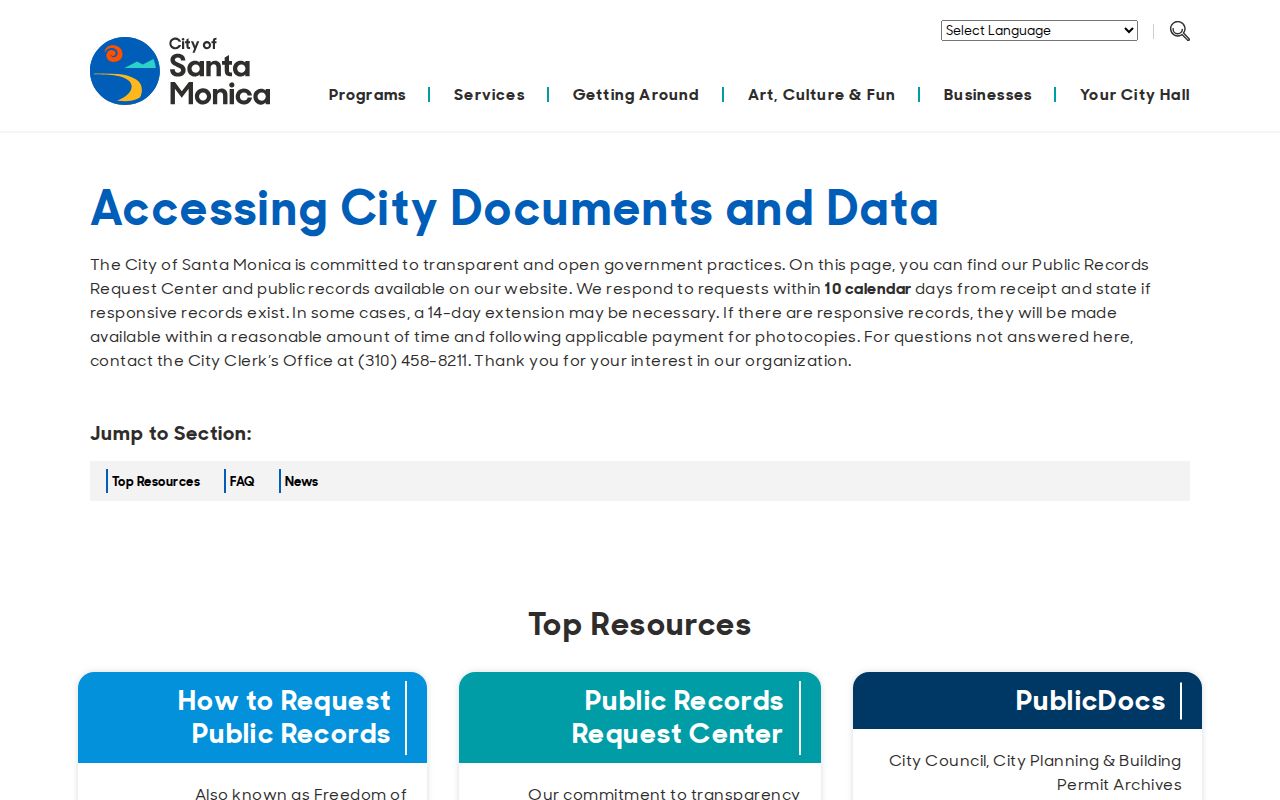
The city hub is useful for identifying the right department before sending a request, which keeps a residents directory search tied to a real record series.
Start With a Santa Monica Resident AIN
The county assessor is the bridge between a street and the recorder's name index. Search the Los Angeles County Assessor Portal by street address or AIN, then compare the result with the Assessor Map. An AIN is a ten-digit Assessor Identification Number, often displayed in map-book, page, and parcel groups. It identifies a taxable parcel. It is not a postal address, a household roster, or proof that an owner lives there.
Capture the situs, legal description, use code, year built, square footage or unit count when shown, assessed land and improvement values, and the map link. A situs is the physical parcel location. A mailing address is where tax correspondence goes. If the two differ, the owner may use an agent, trust, business, or separate mailing destination. The difference is a clue for record routing, not a conclusion about residence.
| Street Address | Text or autocomplete; normalize number, direction, and street name. |
|---|---|
| AIN | Numeric text; use the full ten-digit identifier when available. |
| Map Search | Pan, zoom, and click parcel polygons to inspect adjacent lots. |
| Layers and Basemap | Use parcel, imagery, and jurisdiction context for orientation. |
| Print or Share | Portal controls vary; retain the parcel identifier and search date. |
This search-field pattern explains why a broad “who lives here” request should narrow to a parcel first. The assessor can point toward ownership; the recorder and historical directory can answer different parts of the same address question.
Current Santa Monica Resident Directories
No public source provides a complete current Santa Monica residents directory. Instead, several partial records describe different relationships to a place. The table below keeps those meanings separate. A property roll is about a taxable interest. A voter service is about an individual's own registration status. A court index is about participation in a case. A business or professional register is about a filing or credential. City requests may reveal a releasable record, but they do not create a household list.
| Source | What It Can Show | Keeper | Access |
|---|---|---|---|
| Assessor parcel and map | AIN, situs, legal description, values, and a specific owner lead | Los Angeles County Assessor | Free parcel tools; owner display restricted online |
| My Voter Status | A voter's own registration status and election information | California Secretary of State | Free identity match |
| Recorded instruments | Grantor, grantee, document type, date, and number | LA County RR/CC | Manual name/year route; paid copies |
| Court party index | Litigant, case type, filing date, courthouse, and image count | Los Angeles Superior Court | Paid search; type-specific coverage |
| City files and permits | Address, project, applicant, contractor, or public role | City of Santa Monica | PublicDocs, archives, or focused request |
| Library directories | Listed residents, businesses, addresses, and historical context | Santa Monica Public Library | Free digital collection and physical shelf |
For one-person work, compare a dated directory or parcel clue with a court, vital, business, or license record rather than combining names from unrelated lists. For street work, keep each AIN separate. A residents directory search becomes more reliable when the record type and date are visible beside the name.
Santa Monica Court Records: Case Coverage
The Los Angeles Superior Court electronic services are a useful name trail, but the cutoff depends on case type. The LASC civil name index covers Unlimited Civil, Probate, and Family Law matters from 1983 forward, Limited Civil from 1991 forward, and Small Claims from 1992 forward. It returns litigant name, case type, filing date, filing location, and the count of available imaged documents. Results update daily. A guest name-search result remains available for two hours, while a purchased document is downloadable for thirty days.
| Case Type | Online Starting Point | What the Result Adds |
|---|---|---|
| Unlimited Civil, Probate, Family | 1983-present | Party trail, filing location, and available image count |
| Limited Civil | 1991-present | Party and case-type context within the covered range |
| Small Claims | 1992-present | Named party and filing details, subject to access limits |
| Older or restricted matters | Archives or courthouse | Clerk-directed access, certified copies, or unavailable material |
The court's electronic display is not the official record. Juvenile, sealed, adoption, and protected portions may be absent. A party can be a business, trustee, guardian, or representative, so a case hit is not proof of a Santa Monica residence. Confirm the case number and read the register or judgment before summarizing what happened.
The court's online-services information shows the guest and image-retention notices that accompany the search.
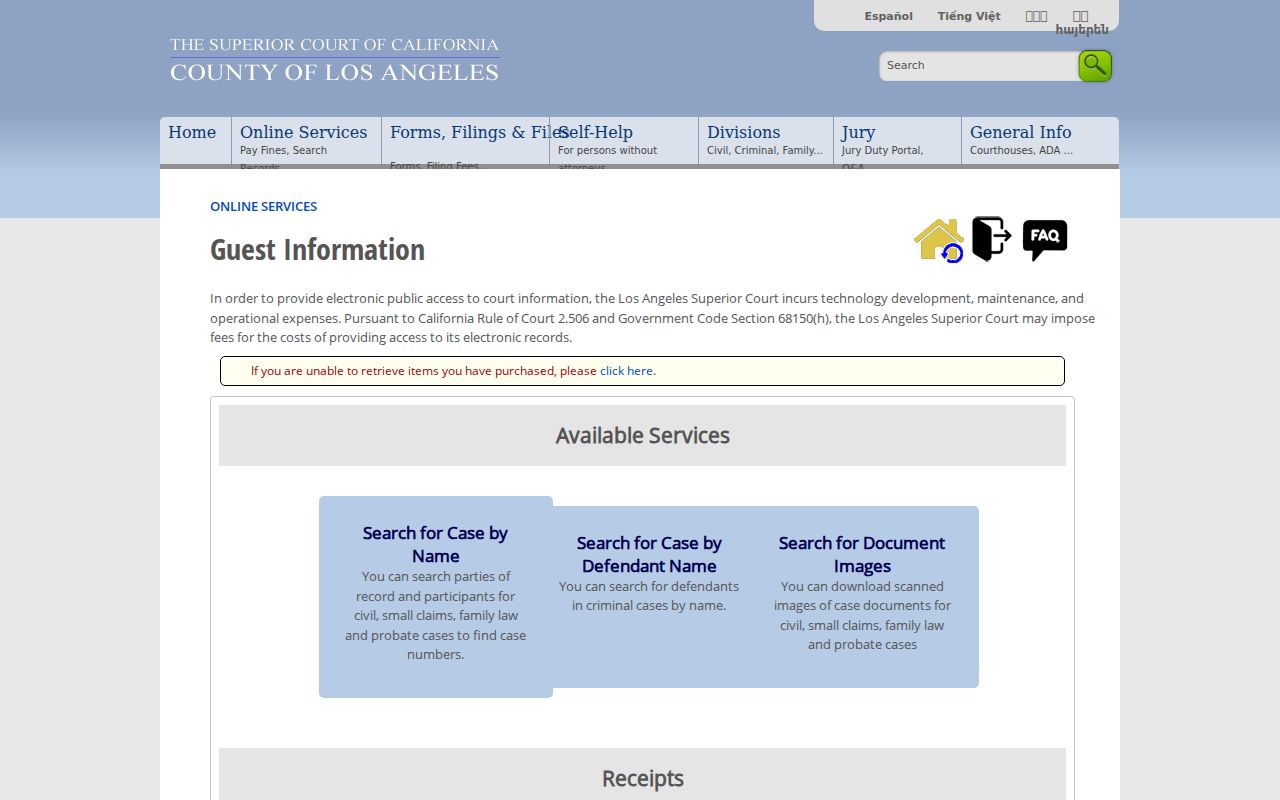
That screen is a reminder to save the case number and filing location before a temporary guest result expires.
Federal matters belong to the Central District of California. The Central District court site identifies the federal venue used for Santa Monica matters.
The federal court site adds venue context before a docket search begins.
Through PACER, a searcher uses an account and pays $0.10 per page, capped at $3 per document in most cases; quarterly charges of $30 or less are waived. Sealed papers remain unavailable.
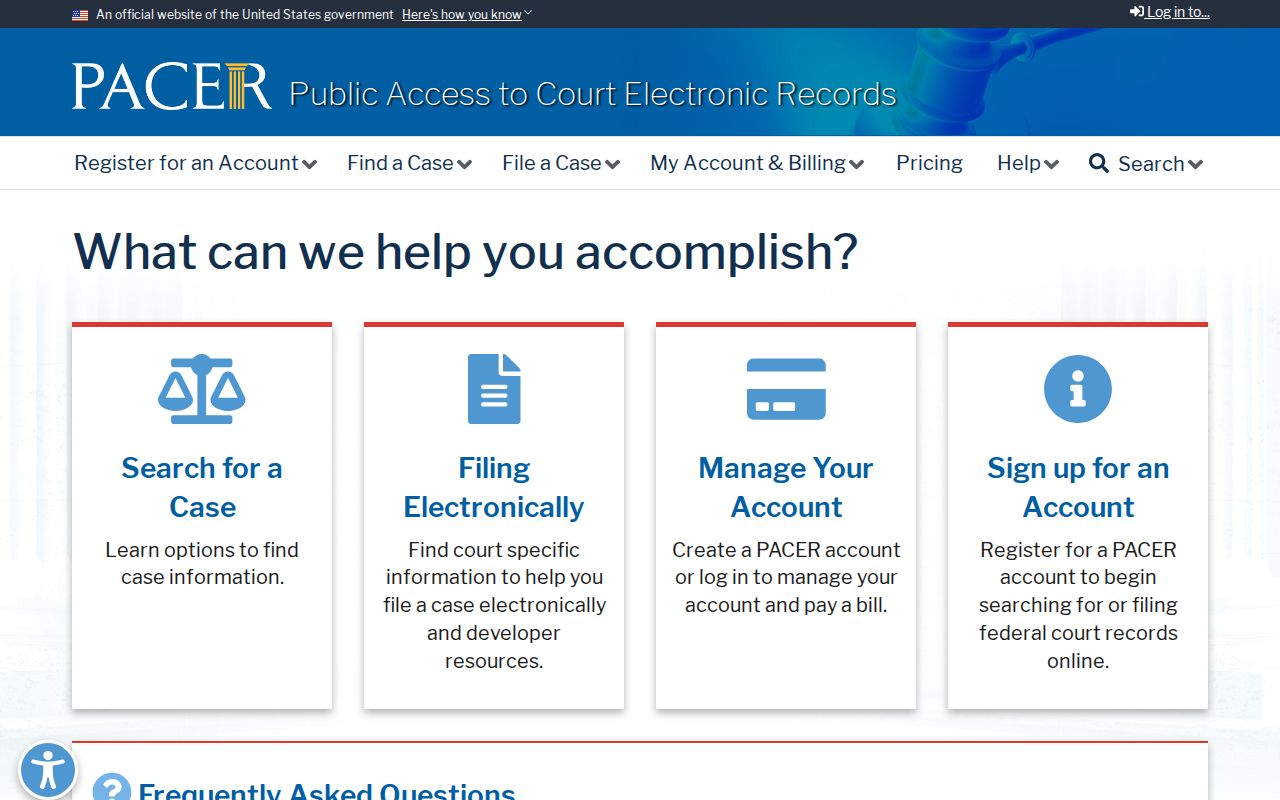
Federal court records can add a separate jurisdictional trail, but they should not be blended with a county court result without keeping the court and case number visible.
Santa Monica Vital Records: Two Copy Types
California vital records do not follow a simple rule that every birth or death becomes public after the same number of years. Health and Safety Code sections 103525 and 103526 distinguish an authorized certified copy from a certified informational copy. The first is available to people who meet the statutory eligibility rules. The second is generally available for research but is marked not valid to establish identity. Confidential marriage records have a separate restriction under Family Code section 509, and adoption records are sealed under Family Code section 9200.
For a known Los Angeles County event, the RR/CC can handle county records and a specified marriage inspection requires an appointment, enough identifiers, and identification. The California Department of Public Health Vital Records route helps when the county is unknown. As of 2026, the state fee schedule lists $31 for a birth copy, $26 for death, $19 for marriage, and $18 for a dissolution certificate. A no-record certificate uses the fee and does not prove that an event never occurred.
| Birth | LA County or CDPH; eligibility and copy type control access. |
|---|---|
| Death | County or statewide route; informational copies may limit identity use. |
| Public marriage | County index and specified-record inspection from 1852 forward. |
| Confidential marriage | Issuing county, parties, or court-order rules apply. |
| Dissolution certificate | CDPH certificate of record is not the court's divorce judgment. |
The Los Angeles County Clerk service page is the practical starting point for a known local marriage or clerk-held filing.
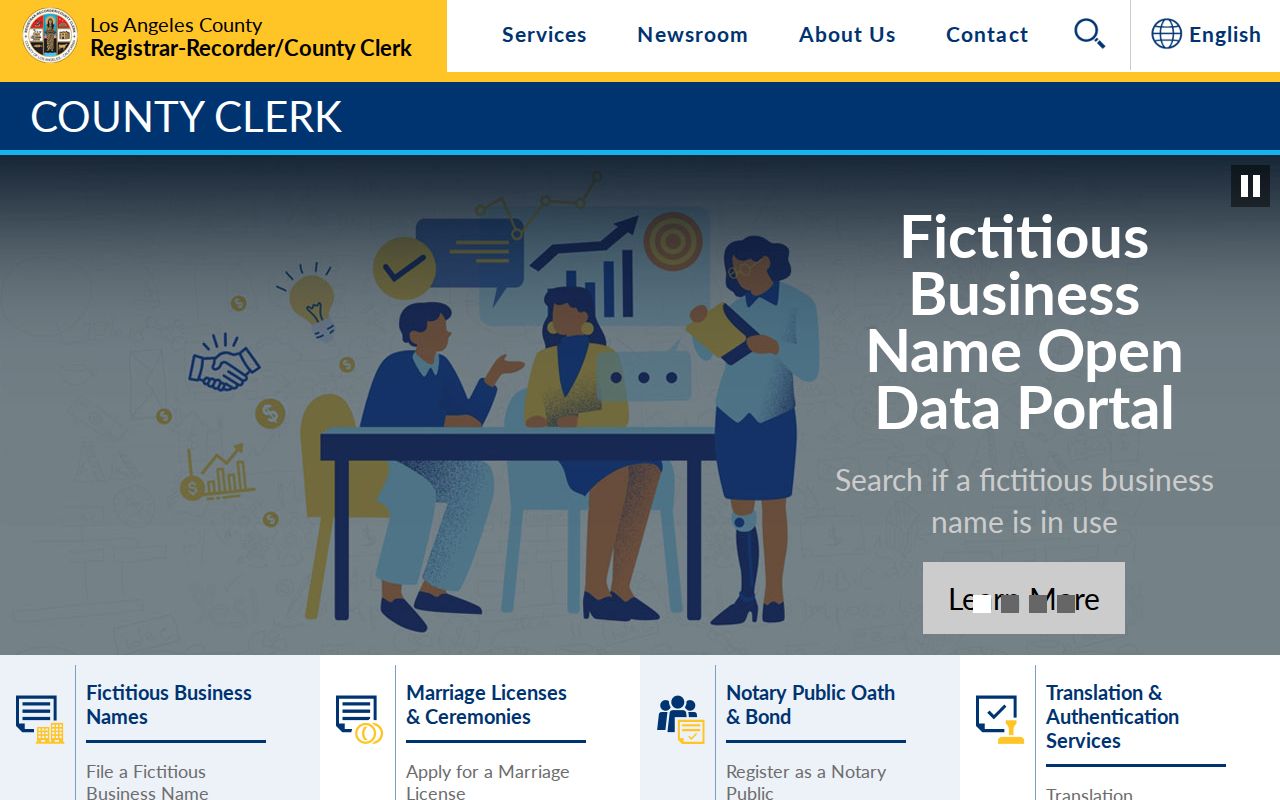
Use the image as a route map only; the custodian still decides whether the requested copy is authorized, informational, confidential, or unavailable.
Santa Monica's 1850 Deed Trail
Los Angeles County says its real-estate record series reaches back to 1850, yet the public cannot browse an open online recorder index. That is a central Santa Monica searching fact. The RR/CC indexes recorded instruments by grantor and grantee name and recording year, not street address. A grantor is the party transferring an interest. A grantee is the party receiving it. The practical sequence is address to parcel, parcel to a specific owner lead, owner to name/year request, and deed to the prior party.
Requests can be made at a counter, by mail or fax, or through paid copy ordering. The county's standard schedule lists a plain copy at $5 for the first page and $3 for each additional page, with a certified copy at $6 for the first page and $3 for each additional page. A name/year search has a $0.50 rate with a $1 minimum. The complete recorded document is supplied rather than selected pages. Allow the county's stated processing time, which can reach twenty working days for ordinary requests.
The reason for the missing web index is tied to Government Code section 7928.205, formerly section 6254.21, which protects officials' home addresses from online posting. This restriction does not erase the paper or orderable record. It simply makes the assessor or parcel map the necessary first step for a street-based residents directory search.
Santa Monica Voter Records
California My Voter Status is an individualized verification service. It asks for first name, last name, date of birth, and the presented last four digits of a California driver license or identification card. It returns status and election information to the voter. It is not a public name directory and cannot be browsed by street, ZIP, or neighbor group.
Election Code section 2194 and implementing regulations in 2 CCR sections 19000 through 19013 limit voter-file access to election, scholarly, journalistic, political, or governmental purposes. The regulated file can contain residence and mailing addresses, phone or email, party preference, precinct, district, status dates, and voting participation history, but commercial use is prohibited. Driver-license, Social Security, signature, and protected-address fields are withheld. A qualified applicant must state the purpose, geography, file type, delivery, and security commitments. The state schedule lists $30 for a specific-record request and $100 for a statewide file, with detailed conditions.
Use the voter route carefully. A lawful personal search is not permission to assemble a casual list of people by street. Use My Voter Status for the individual's own verification and follow the Secretary of State's purpose rules for any file request.
Santa Monica Records Requests Fill Gaps
Santa Monica's Records Request Center is the fallback for a city-created record that is not already visible in PublicDocs, permit archives, E-Permits, planning material, council files, or campaign disclosures. A focused request should name the date range, likely department or record category, record description, preferred delivery, and any helpful attachment. The City Clerk can route the request, but the California Public Records Act does not require an agency to create a new directory or answer a question that is not already a record.
City records can provide an address, permit number, project description, applicant, architect, contractor, committee role, or correspondence trail. Those roles are not the same as occupancy. The current permit workflow is paperless through the Electronic Plan Review System at the Permit Services Center in City Hall East, 1685 Main Street. Older plans may need a department appointment or a request, and architectural or security material can be withheld or redacted.
For an overview of the city's contact and service routes, use the official Santa Monica contact page.
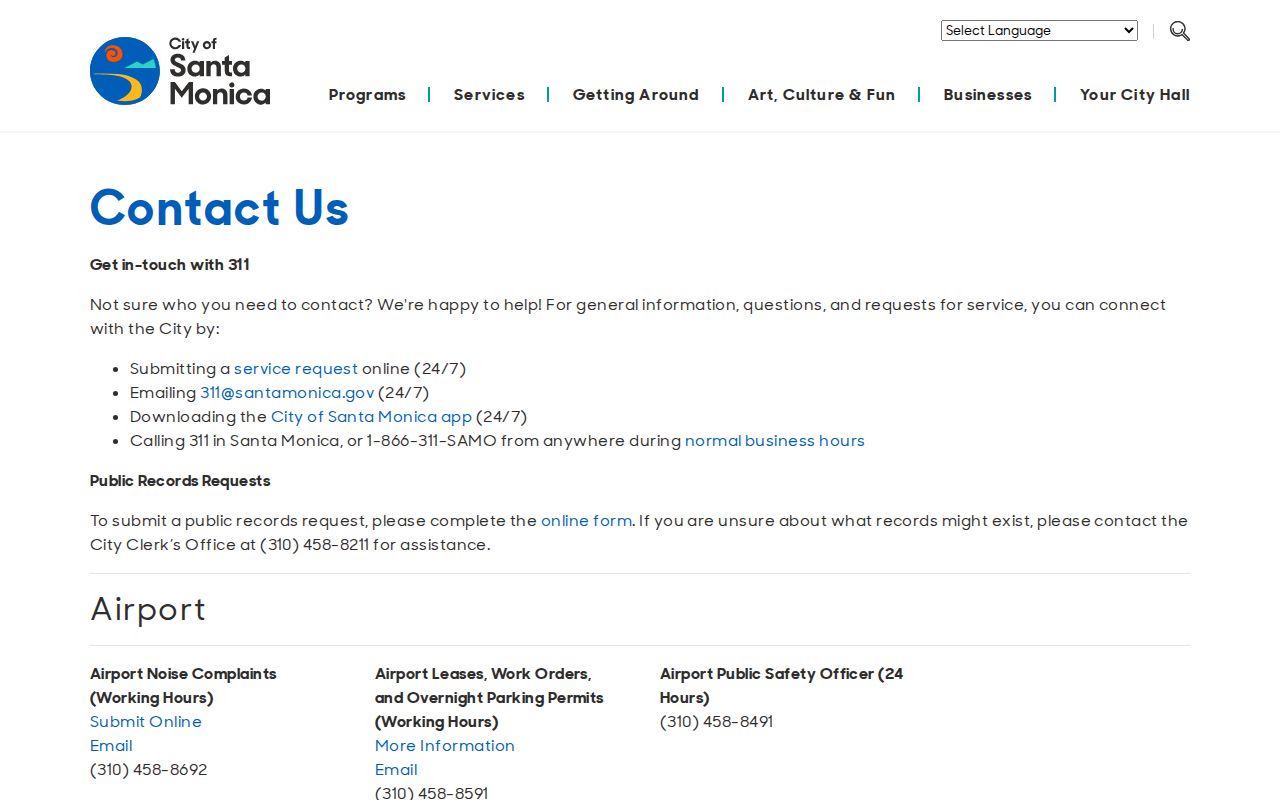
The city contact route is helpful when a record's department is known but its public search location is not.
The Santa Monica public-records request instructions show the city's request channels, ten-day determination rule, and common exemptions.
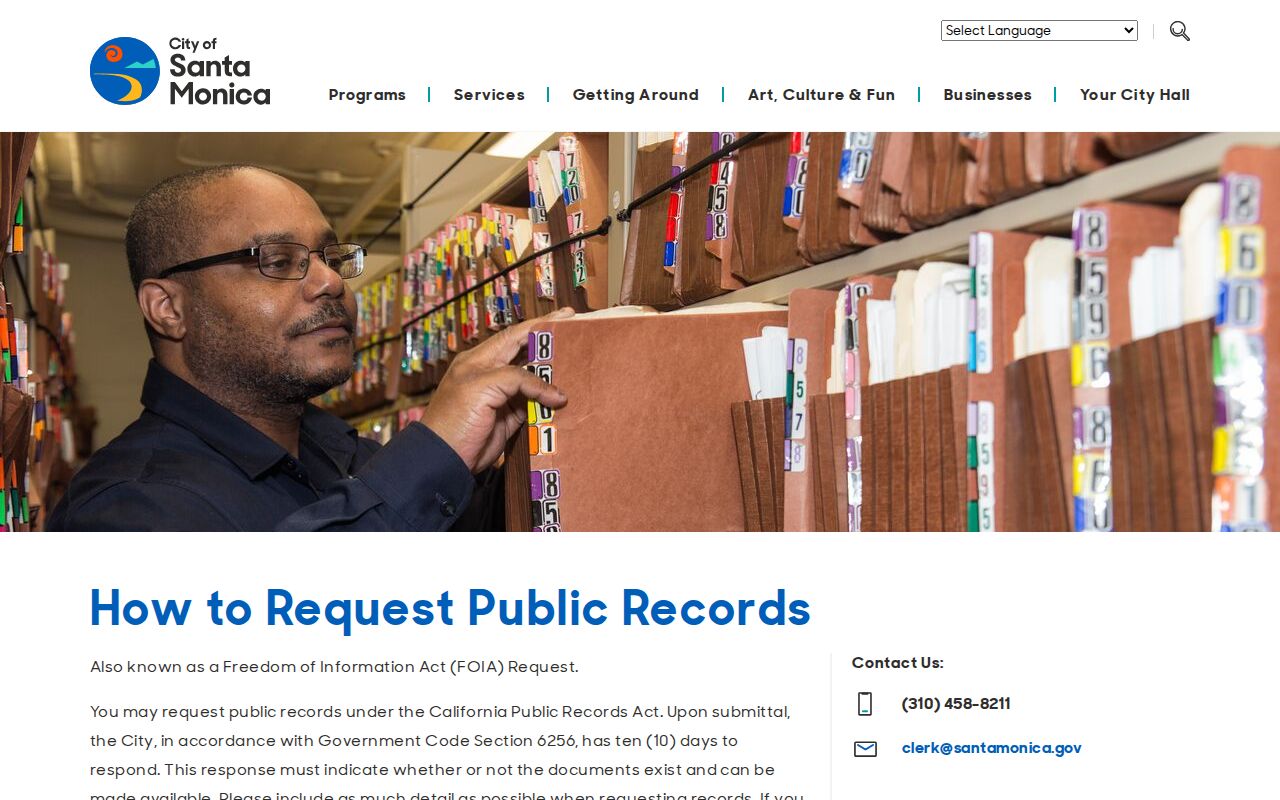
A request record can reveal how a city-created file is routed without turning the request system into a people directory.
Note: Inspection is generally free under the city process, while direct duplication and special statutory products can carry separate charges.
Historical Santa Monica Resident Directories
The Santa Monica Public Library's Sharla P. Boehm Collection is the strongest historical residents directory source. The physical shelf holds 63 volumes, while the live digital catalog showed 46 named editions on August 16, 2026. The online run starts with 1899, includes 1905 and 1907, contains two distinct 1912 editions, and continues through 1998-99 with substantial gaps. The collection is more than a list of names: entries can pair a person with an address, spouse notation, occupation, business, or reverse street sequence.
The exact collection method and year gaps are covered in the Santa Monica city directory archive. For a quick orientation, start with a name or street, browse the page image, record the entry as printed, and compare adjacent editions. An address can cross older community labels, so the book's front matter and geographic scope matter as much as the surname.
Santa Monica State-Level Record Clues
Some official portals provide a name or affiliation clue without describing a current household. California's Department of Consumer Affairs license search can show a professional credential and public status. The Secretary of State business search can show an entity, agent, filing address, and formation information. The State Controller's unclaimed-property search can connect an owner name with a locality. The CDCR incarcerated-person locator, the county jail search, and the Megan's Law registry each serve a defined public purpose and carry their own limits.
These sources are valuable when the question is about a public filing, professional record, custody status, or an unclaimed-property lead. They are not substitutes for a parcel, directory, vital, or court record. Keep the agency, result date, and record number with the note. A name match becomes stronger only when an independent record aligns with the same place and time.
The California incarcerated-person locator illustrates why the agency's own scope matters for a residents directory search.
A state custody result is a limited status record, not a complete life history or a statement about a person's current residence.
Match Santa Monica Records to Questions
Official rolls have a stronger chain of custody than a commercial compilation service, but each official roll answers a narrower question. A directory entry may be old. A parcel may describe title rather than occupancy. A voter record is purpose-restricted. A court index shows a party, not an outcome. A commercial compilation may be fast, but merged names, stale feeds, and unclear dates make it a lead that needs verification.
| Route | Strength | Limit |
|---|---|---|
| Official parcel, court, vital, or directory record | Named custodian, defined fields, date, and access rule | Coverage is partial and may require a fee or request |
| City request | Can reach a non-indexed municipal file | Must identify an existing, non-exempt record |
| Commercial compilation | May surface a spelling or prior-location lead | Merge errors, stale data, unclear source and cost |
- Roll
- An official list for a defined purpose, such as assessment or voter administration.
- Index
- A finding aid that points to a fuller record; it is not always the record itself.
- Criss-cross directory
- A reverse arrangement that starts with an address or street and points toward a listed person.
- Parcel
- A mapped taxable interest identified by an AIN; one parcel can contain many units or people.
Protected Addresses in Santa Monica Records
Some absences are intentional. California's Safe at Home program gives eligible survivors and certain other participants a substitute mailing address, confidential mail forwarding, and a confidential voter-registration route. A protected address should not be reconstructed from another public source. The program does not erase every older record, and a recorder redaction or removal requires a statute, defined process, or court order.
Santa Monica records also contain ordinary limits. DMV information is restricted by the Driver's Privacy Protection Act. Voter files exclude confidential registrations and sensitive identifiers. Court, adoption, family, juvenile, medical, code-enforcement, law-enforcement, and personal-contact material can be withheld or redacted. When a result is wrong, contact the custodian that created it rather than asking a directory service to rewrite the source.
Personal and lawful use. Use public information for family history, estate research, civic understanding, reconnecting, or a defined records question. Never use an address trail to stalk, threaten, or harass another person.