
Find Santa Monica Residents by Record
Every directory search starts with the fact you need proven. A parcel question belongs with the Los Angeles County Assessor, not a voter-status form. A past occupant can appear in a Santa Monica Public Library directory. That person may never have held title. Court indexes confirm a case exists. They do not prove where anyone lives now. The recorder adds a deed trail once an address has become an owner name and an approximate year. Each source means something different. The safest result pairs two records that agree on time and place.
Work with the parcel map first for a current address. Record the Assessor Identification Number, or AIN. For a known person, keep the exact spelling and middle initial. Also keep the former name and a useful date range. Older households call for the digitized directory. Read the page image itself instead of trusting OCR alone, then compare nearby editions. The Santa Monica street directory angle works best when an address is the starting clue. The work then moves parcel by parcel.
The official trail informs, but it never completes. Owners, registered voters, litigants, licensees, business principals, and directory subscribers are different groups. A multi-unit parcel can hold many households. A protected person may be missing by design. Treat every result as a lead. Attach a custodian, a date, and a record type to it.
- Write down the starting clue, whether it is a name, address, parcel, year, or family relationship.
- Use the county assessor map or the library collection to turn that clue into a precise name, AIN, or directory entry.
- Confirm the lead with a second custodian, such as a deed, court index, vital application, or dated directory.
- Use the proper request route when a source is not online, keeping the record date and scope narrow.
- Read the access limit before sharing a result, especially for voter, court, protected-address, and safety-related records.
Note: A record can name an owner, voter, party, or listed occupant without ever establishing who is physically present at the address today.
Santa Monica Resident Records Offices
Santa Monica is an incorporated city inside Los Angeles County. Its records cross many lines. Permits, planning files, council material, campaign disclosures, and city records requests belong to the City Clerk and municipal departments. The Registrar-Recorder/County Clerk, or RR/CC, holds recorded real-estate instruments and county-clerk products. The county assessor supplies parcel facts. Judgments and probate papers stay with the Superior Court. California adds statewide systems for vital records, voter rolls, licensing, business filings, and confidentiality.
Los Angeles County RR/CC
Real Estate Records and County Clerk services
Countywide counter, mail, fax, and copy ordering
(800) 201-8999
Los Angeles County Assessor
AIN, situs, legal description, map, and parcel facts
Online address/AIN/map search; specific-property owner request
Los Angeles County Elections
Voter administration for Santa Monica
(800) 815-2666
Self-status access and purpose-qualified file requests
Santa Monica City Clerk
1685 Main Street, Room 102, Santa Monica, CA 90401
(310) 458-8211
Online, in-person, or mailed city-records requests
PublicDocs, permit archives, active E-Permits, council files, and campaign disclosures cover a lot of ground. When they leave a focused question open, the City Records Request Center is the fallback. A request can go in after account creation online, at the counter, or by mail. Ten calendar days is the stated determination period. Unusual circumstances can add a fourteen-day extension. Inspection is generally free. Direct duplication can carry a charge.
The Santa Monica documents and data hub shows how city records divide among PublicDocs, planning, permits, and the request channels.
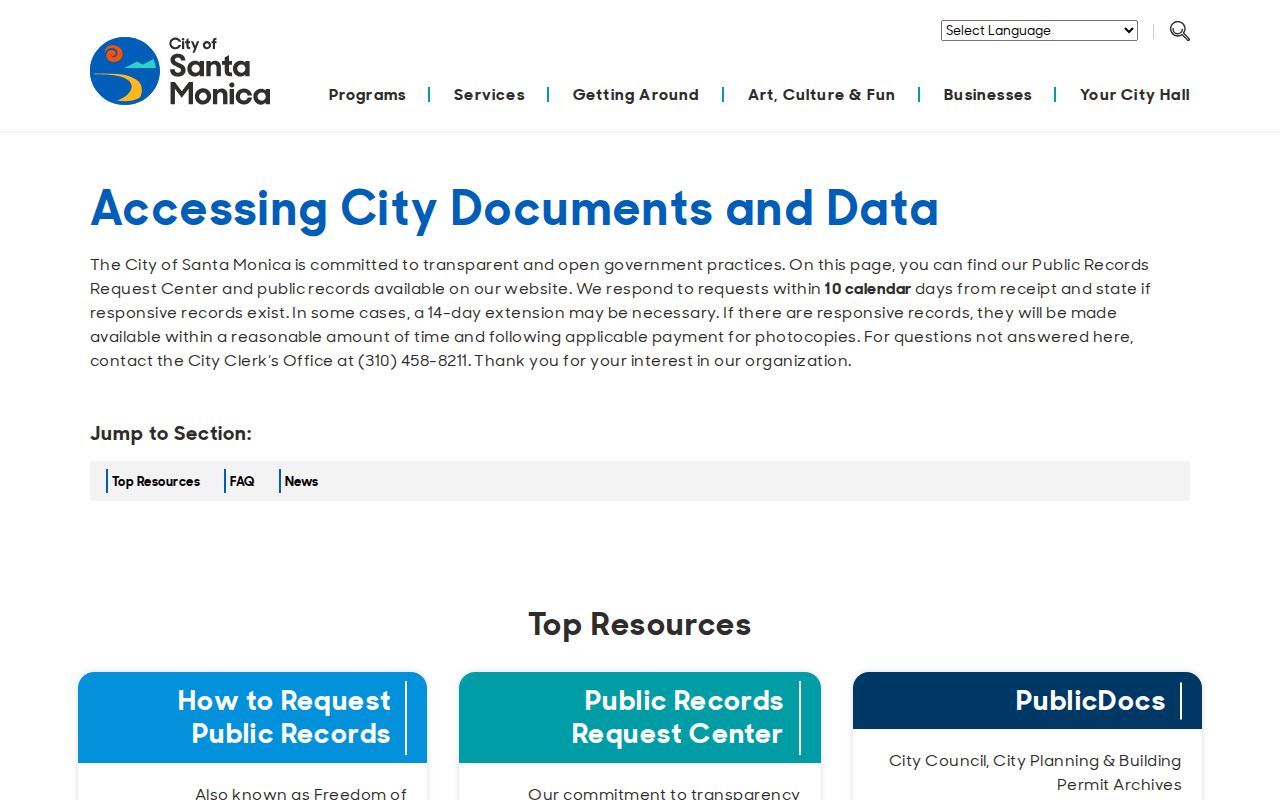
The hub names the right department before a request goes out. That keeps a residents directory search tied to a real record series rather than a guess about where a document lives.
Start With a Santa Monica Resident AIN
The county assessor is the bridge between a street and the recorder's name index. Search the Los Angeles County Assessor Portal by street address or by AIN. Then compare the result against the Assessor Map. An AIN is a ten-digit Assessor Identification Number, often displayed in map-book, page, and parcel groups. It identifies a taxable parcel. It is not a postal address. It is not a household roster or proof an owner lives there.
Write down the situs, legal description, use code, year built, square footage or unit count when shown, assessed land and improvement values, and the map link. A situs is the physical parcel location. A mailing address is where tax correspondence goes. The two can differ, which may point to an agent, trust, business, or separate mailing destination. Treat the difference as a clue for record routing. It is not a conclusion about residence.
| Street Address | Text or autocomplete; normalize number, direction, and street name. |
|---|---|
| AIN | Numeric text; use the full ten-digit identifier when available. |
| Map Search | Pan, zoom, and click parcel polygons to inspect adjacent lots. |
| Layers and Basemap | Use parcel, imagery, and jurisdiction context for orientation. |
| Print or Share | Portal controls vary; retain the parcel identifier and search date. |
Narrow the question to a parcel first. That is the lesson of these search fields. The assessor points toward ownership, while the recorder and the historical directory answer different parts of the same address question.
Current Santa Monica Resident Directories
No public source offers a complete current Santa Monica residents directory. Several partial records describe different relationships to a place instead. The table below keeps those meanings separate. A property roll tracks a taxable interest. A voter service covers a person's own registration status. A court index tracks participation in a case, and a business or professional register tracks a filing or credential. City requests may surface a releasable record, but they never create a household list.
| Source | What It Can Show | Keeper | Access |
|---|---|---|---|
| Assessor parcel and map | AIN, situs, legal description, values, and a specific owner lead | Los Angeles County Assessor | Free parcel tools; owner display restricted online |
| My Voter Status | A voter's own registration status and election information | California Secretary of State | Free identity match |
| Recorded instruments | Grantor, grantee, document type, date, and number | LA County RR/CC | Manual name/year route; paid copies |
| Court party index | Litigant, case type, filing date, courthouse, and image count | Los Angeles Superior Court | Paid search; type-specific coverage |
| City files and permits | Address, project, applicant, contractor, or public role | City of Santa Monica | PublicDocs, archives, or focused request |
| Library directories | Listed residents, businesses, addresses, and historical context | Santa Monica Public Library | Free digital collection and physical shelf |
A Santa Monica residents directory search works best when the record type and date sit right beside the name. Keep them side by side. For one person, match a dated directory entry or parcel clue against a single court, vital, business, or license record. Do not blend names from unrelated lists. Street work is different. Keep each AIN separate so the parcel trail stays clean from start to finish.
Santa Monica Court Records: Case Coverage
The Los Angeles Superior Court electronic services leave a strong name trail. The cutoff varies by case type. Coverage dates matter here. The LASC civil name index reaches back to 1983 for Unlimited Civil, Probate, and Family Law matters. It goes to 1991 for Limited Civil, and to 1992 for Small Claims. Each hit lists the litigant name, case type, filing date, and filing location. It also shows how many imaged documents exist. Results refresh daily. A guest name search stays viewable for two hours. A purchased document stays downloadable for thirty days.
| Case Type | Online Starting Point | What the Result Adds |
|---|---|---|
| Unlimited Civil, Probate, Family | 1983-present | Party trail, filing location, and available image count |
| Limited Civil | 1991-present | Party and case-type context within the covered range |
| Small Claims | 1992-present | Named party and filing details, subject to access limits |
| Older or restricted matters | Archives or courthouse | Clerk-directed access, certified copies, or unavailable material |
An electronic case display is never the official record. Juvenile, sealed, adoption, and protected portions may simply be missing. Parties are not always residents either. A litigant can be a business, trustee, guardian, or representative. So a case hit alone proves nothing about a Santa Monica address. Pull the case number and read the register or judgment before drawing conclusions. Then check the court's online-services information for the guest and image-retention notices that ride along with each search.
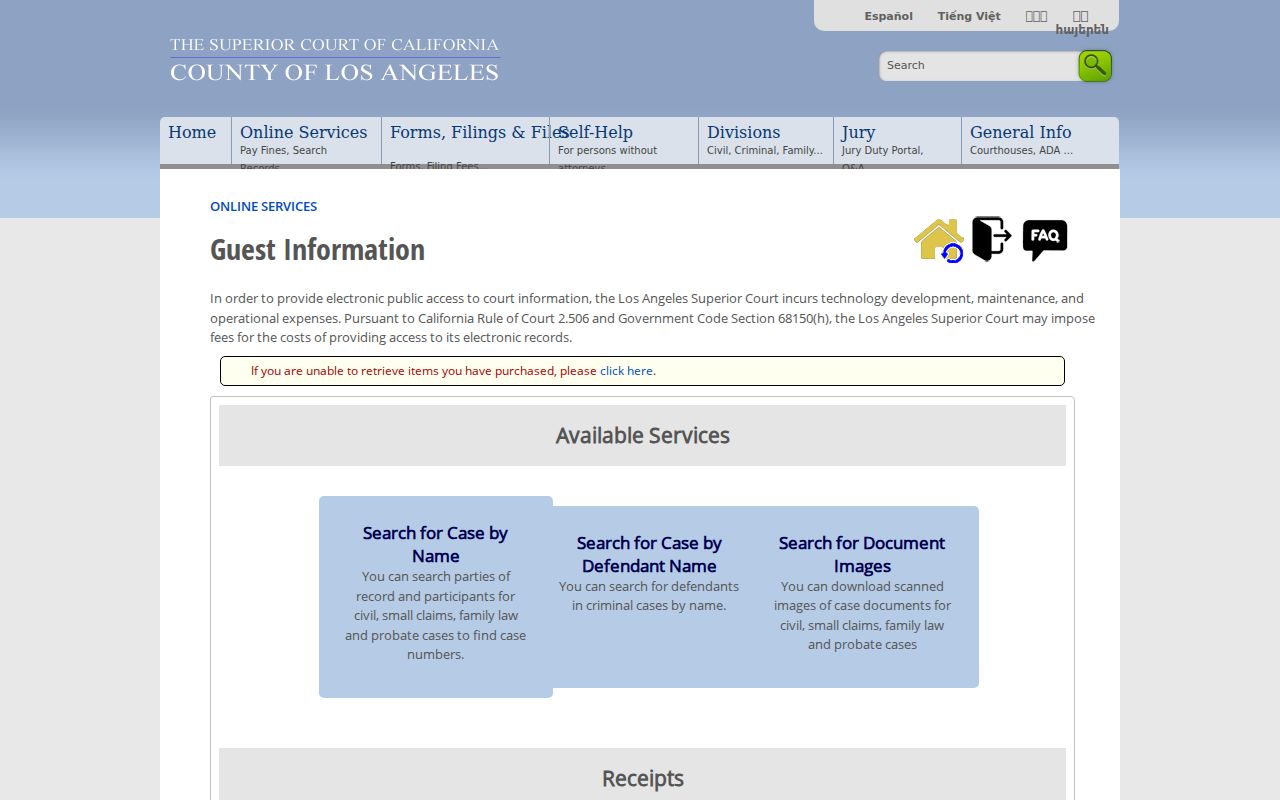
Save the case number and filing location before a guest result expires. The two-hour window closes fast. Federal matters take a different path through the Central District of California, and the Central District court site shows the federal venue that handles Santa Monica cases.
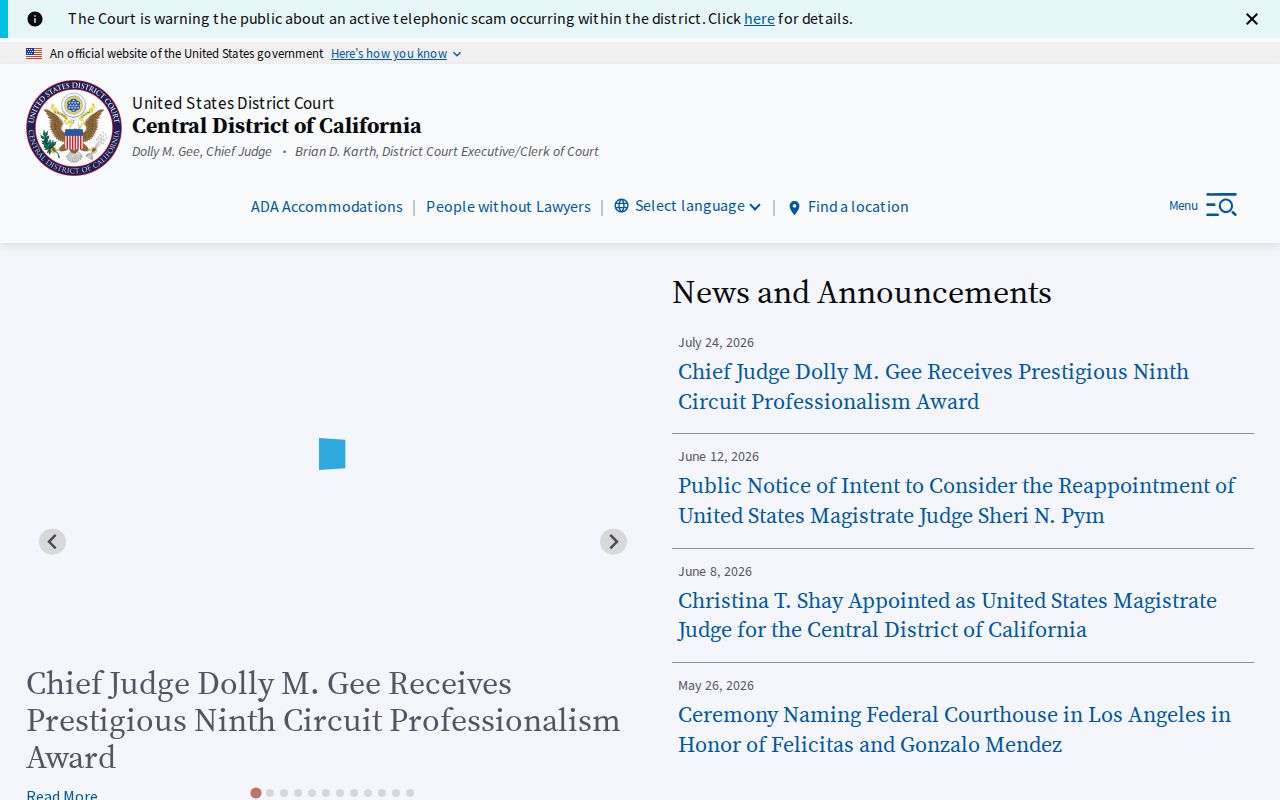
The federal court site settles the venue question before any docket search begins. Dockets then live in PACER, which needs an account. Pages cost $0.10 each, capped at $3 per document in most cases. Quarterly charges of $30 or less are waived. Sealed papers stay off limits no matter what.
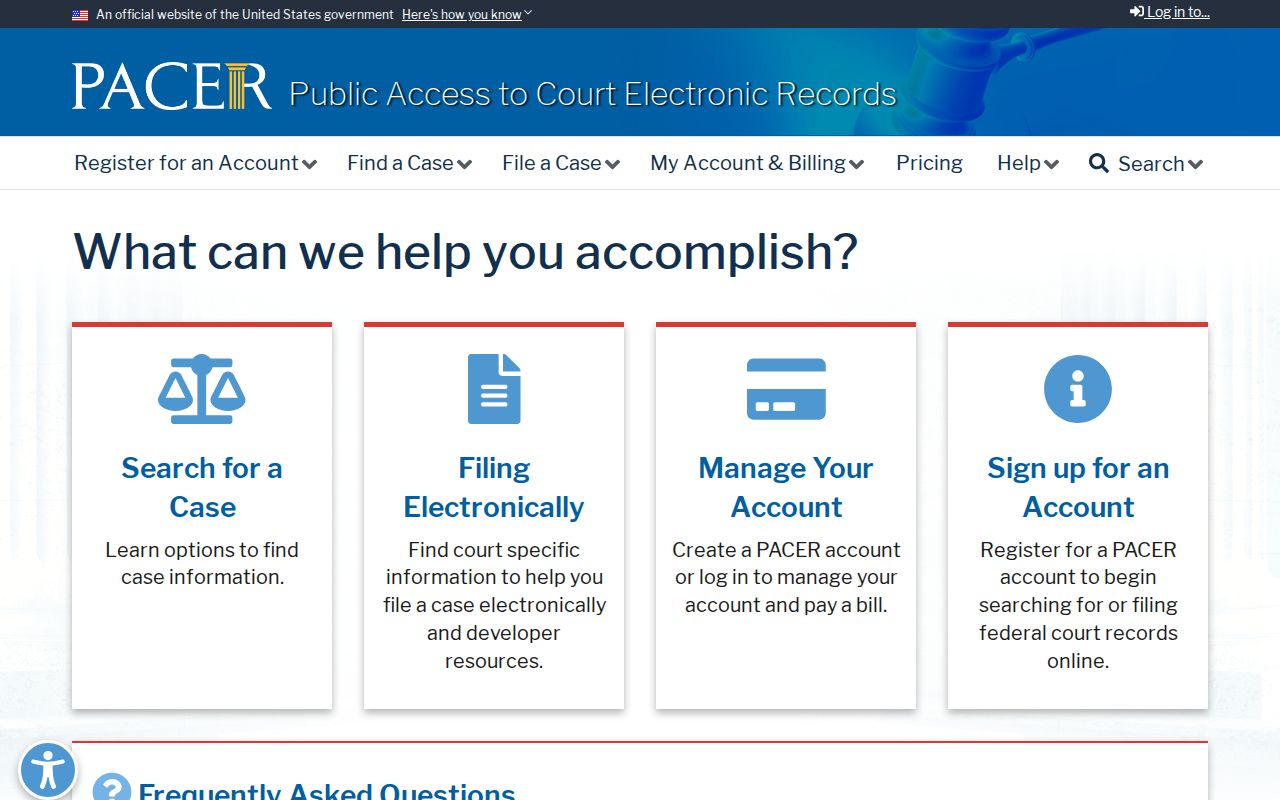
Federal court records open a second jurisdictional trail. But keep the court and case number visible next to any county result, and never blend the two into one story about a name.
Santa Monica Vital Records: Two Copy Types
California vital records follow no single rule about births and deaths. Those events do not simply turn public after a set number of years. Health and Safety Code sections 103525 and 103526 draw the real line. One path is the authorized certified copy. That copy goes only to people who meet the statutory eligibility rules. The other path is the certified informational copy. It is generally available for research, but it is stamped as not valid to establish identity. Confidential marriage records carry their own restriction under Family Code section 509. Adoption records are sealed under Family Code section 9200.
For a known Los Angeles County event, the RR/CC handles county records. A specified marriage inspection needs an appointment, sufficient identifiers, and identification. The county can be unknown. The California Department of Public Health Vital Records route is the better start then. The 2026 state fee schedule lists $31 for a birth copy. Death is $26, marriage is $19, and a dissolution certificate is $18. A no-record certificate still consumes the fee. It also proves nothing about whether the event occurred.
| Birth | LA County or CDPH; eligibility and copy type control access. |
|---|---|
| Death | County or statewide route; informational copies may limit identity use. |
| Public marriage | County index and specified-record inspection from 1852 forward. |
| Confidential marriage | Issuing county, parties, or court-order rules apply. |
| Dissolution certificate | CDPH certificate of record is not the court's divorce judgment. |
Start with the Los Angeles County Clerk service page for any known local marriage or clerk-held filing. That office holds the practical entry point for county-level vital work tied to Santa Monica.
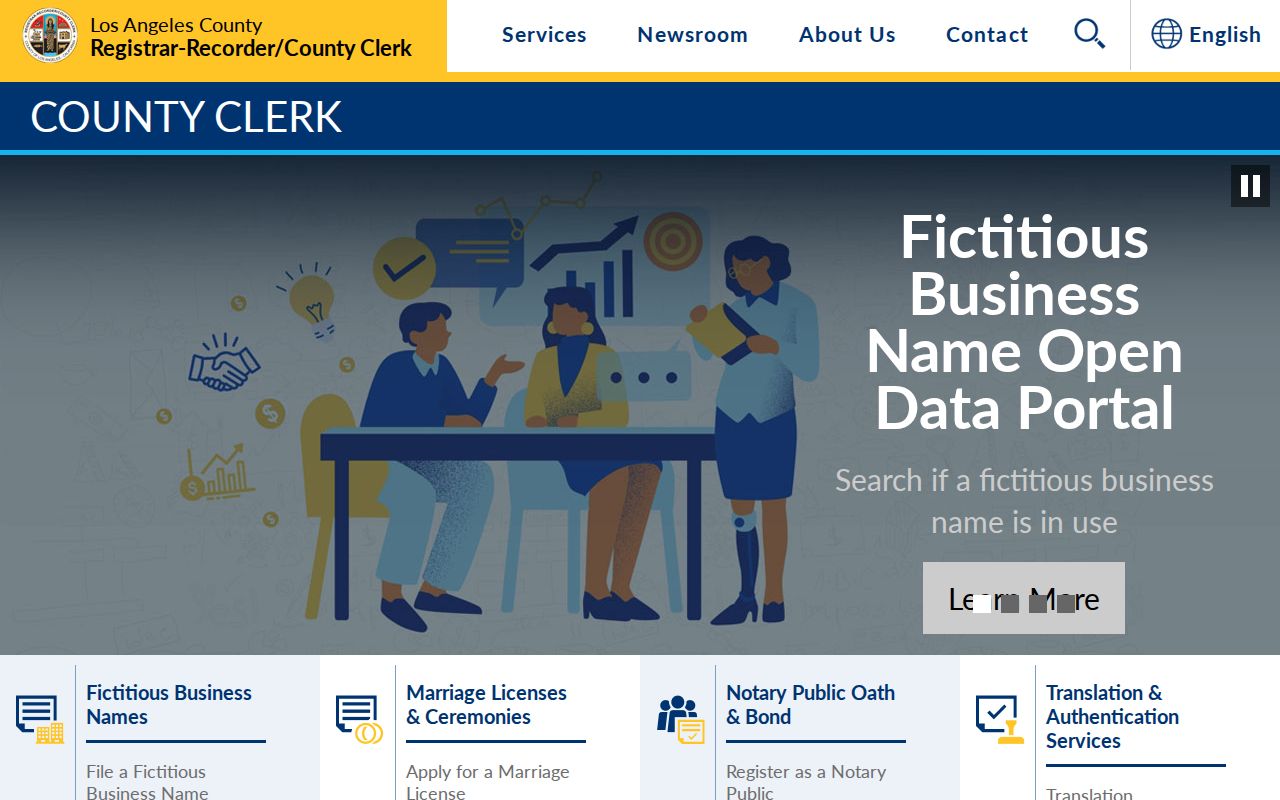
Treat any image here as a route map. The custodian alone decides whether a requested copy is authorized, informational, confidential, or simply unavailable.
Santa Monica's 1850 Deed Trail
Los Angeles County traces its real-estate record series back to 1850. Yet no open online recorder index exists for public browsing. That gap is a central fact of any Santa Monica searching effort. The RR/CC indexes recorded instruments by grantor and grantee name. It never indexes by street address. A grantor transfers an interest. A grantee receives it. The practical sequence runs address to parcel, then parcel to an owner lead. Next comes owner to a name-and-year request, and deed to the prior party. Requests go through a counter, mail or fax, or paid copy ordering. The standard schedule prices a plain copy at $5 for the first page and $3 per additional page. Certification runs $6 for the first page and $3 after that. A name-and-year search runs $0.50 with a $1 minimum. The county supplies the complete recorded document rather than selected pages. Ordinary requests can take up to twenty working days. Why no web index? Government Code section 7928.205, formerly section 6254.21, bars online posting of officials' home addresses. The paper and orderable record still exists untouched. The restriction simply forces a street-based residents directory search through the assessor first. A parcel map can serve as the alternate route.
Santa Monica Voter Records
California runs an individualized tool called My Voter Status. A Santa Monica voter enters a first name, last name, and date of birth. The voter also supplies the last four digits of a driver license or state ID. The service then returns status and election details for that one voter. It is not a browsable residents directory. You cannot search it by street, ZIP code, or neighbor group.
The broader voter file sits behind legal guardrails. Election Code section 2194 restricts access to election, scholarly, journalistic, political, or governmental purposes. Regulations in 2 CCR sections 19000 through 19013 do the same. The regulated file can hold residence and mailing addresses. It also lists phone or email, party preference, precinct, district, status dates, and voting participation history. Commercial use is prohibited outright. Driver-license numbers, Social Security digits, signatures, and protected-address fields stay withheld from any release. Applicants must state their purpose, geography, file type, delivery method, and security commitments before receiving data. The state fee schedule lists $30 for a specific-record request. A statewide file runs $100, with detailed conditions attached.
Use the voter route carefully. A lawful personal search is not permission to assemble a casual list of people by street. Use My Voter Status for the individual's own verification and follow the Secretary of State's purpose rules for any file request.
Santa Monica Records Requests Fill Gaps
Some city-created records never surface in PublicDocs, permit archives, E-Permits, planning material, council files, or campaign disclosures. For those, Santa Monica's Records Request Center is the fallback. A focused request works best. Name the date range, the likely department or record category, and a clear record description. Add preferred delivery and any helpful attachment. The City Clerk can route it from there.
One limit matters, though. The California Public Records Act does not force an agency to build a new directory. It also does not force one to answer a question that is not already a record. What a city record can yield is still useful. It can give an address, permit number, project description, applicant, architect, contractor, committee role, or correspondence trail. Those roles are not the same as occupancy. The current permit workflow runs paperless through the Electronic Plan Review System. That system operates at the Permit Services Center in City Hall East, 1685 Main Street. Older plans may require a department appointment or a request. Architectural or security material can be withheld or redacted.
For a plain overview of the city's contact and service routes, use the official Santa Monica contact page.
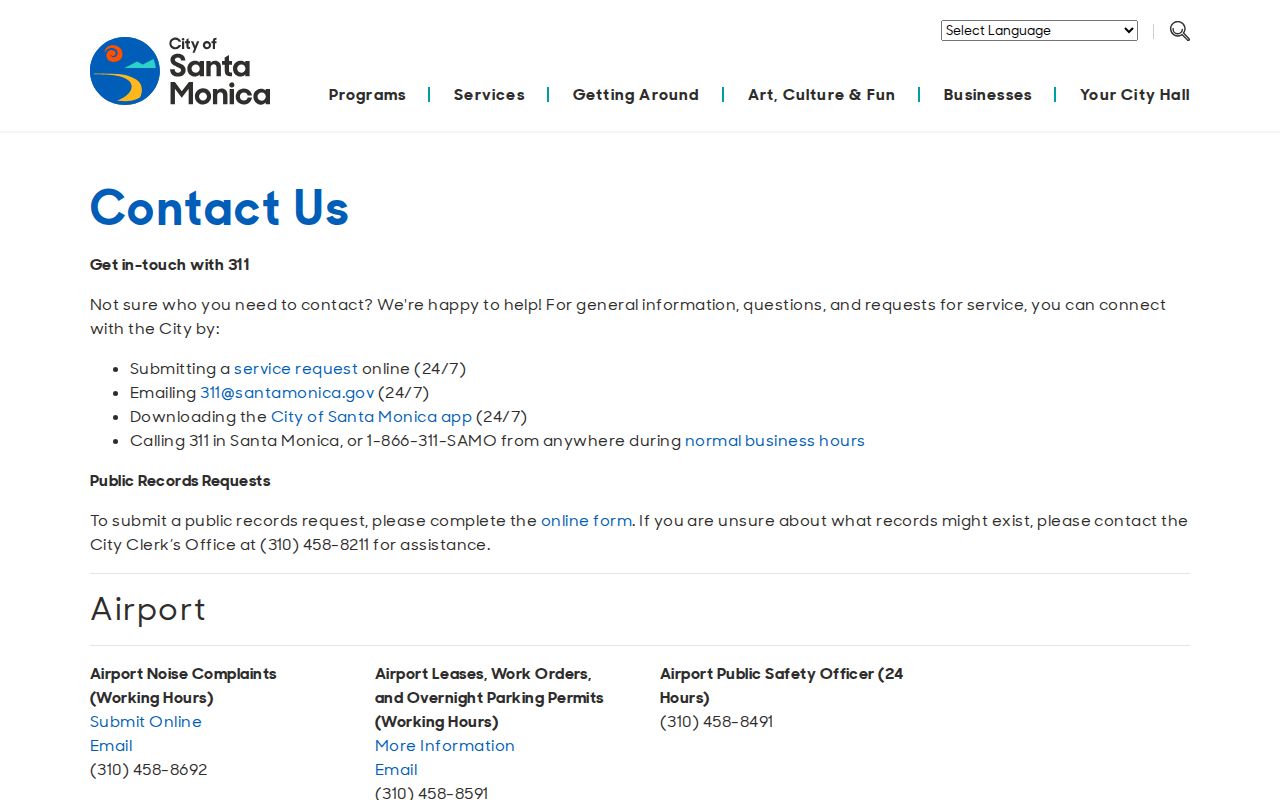
The city contact route helps when a record's department is known but its public search location is not. Santa Monica keeps its routes organized by service area. The Santa Monica public-records request instructions lay out the request channels, the ten-day determination rule, and common exemptions.
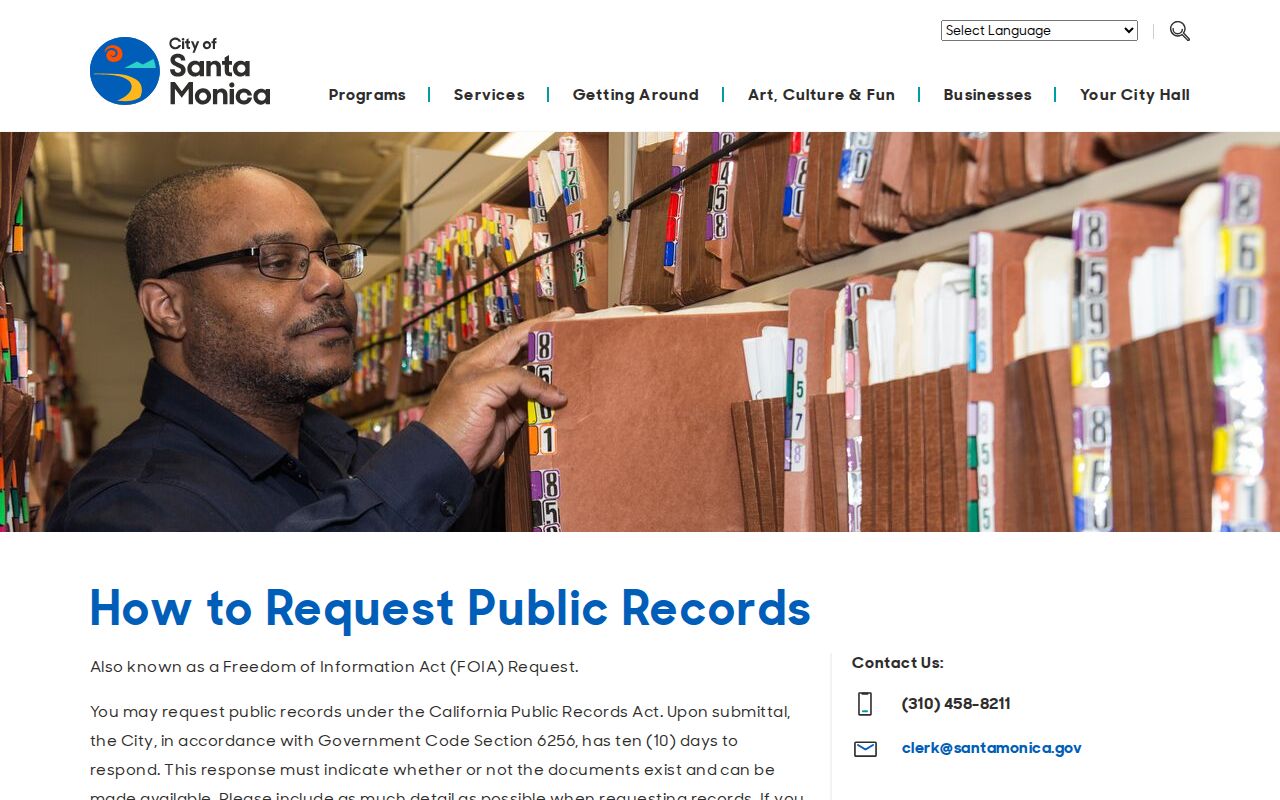
A request record can show how a city-created file gets routed. It does not turn the request system into a people directory. Note: Inspection is generally free under the city process, while direct duplication and special statutory products can carry separate charges.
Historical Santa Monica Resident Directories
For historical resident lookups, the Santa Monica Public Library's Sharla P. Boehm Collection is the strongest source. The physical shelf holds 63 volumes, and the digital catalog lists 46 named editions. The online run opens with 1899. It includes 1905 and 1907. It carries two distinct 1912 editions and reaches 1998-99 with substantial gaps along the way. These volumes do more than list names. An entry can pair a person with an address. A spouse notation, an occupation, a business, or a reverse street sequence can also appear.
The collection method and year gaps are detailed in the Santa Monica city directory archive. Start with a name or a street. Browse the page image, record the entry as printed, and compare adjacent editions. An address can cross older community labels. The book's front matter and geographic scope matter as much as the surname itself.
Santa Monica State-Level Record Clues
Some official portals offer a name or affiliation clue without describing a current household. California's Department of Consumer Affairs license search can surface a professional credential. It also shows the credential's public status. The Secretary of State business search shows an entity, agent, filing address, and formation information. The State Controller's unclaimed-property search can link an owner name with a locality. The CDCR incarcerated-person locator serves a defined public purpose. So do the county jail search and the Megan's Law registry. Each has its own limits.
These sources shine when the question involves a public filing. They help with a professional record, custody status, or an unclaimed-property lead. They are not substitutes for a parcel, directory, vital, or court record. Keep the agency, result date, and record number with your note. A name match grows stronger only when an independent record aligns. That record must point to the same place and time.
The California incarcerated-person locator illustrates why an agency's own scope matters. That scope shapes any residents directory search.
A state custody result is a narrow status record. It is not a life history, and it says nothing about where a person lives now in Santa Monica.
Match Santa Monica Records to Questions
Official rolls carry a stronger chain of custody than a commercial compilation service. The tradeoff is scope. A residents directory entry may be old. A parcel describes title, not occupancy. A voter record is purpose-restricted, and a court index shows a party rather than an outcome. A commercial compilation may be fast, but merged names, stale feeds, and unclear dates make it a lead that still needs verification.
| Route | Strength | Limit |
|---|---|---|
| Official parcel, court, vital, or directory record | Named custodian, defined fields, date, and access rule | Coverage is partial and may require a fee or request |
| City request | Can reach a non-indexed municipal file | Must identify an existing, non-exempt record |
| Commercial compilation | May surface a spelling or prior-location lead | Merge errors, stale data, unclear source and cost |
- Roll
- An official list for a defined purpose, such as assessment or voter administration.
- Index
- A finding aid that points to a fuller record; it is not always the record itself.
- Criss-cross directory
- A reverse arrangement that starts with an address or street and points toward a listed person.
- Parcel
- A mapped taxable interest identified by an AIN; one parcel can contain many units or people.
Protected Addresses in Santa Monica Records
Not every gap in Santa Monica records is an accident. California's Safe at Home program shields eligible survivors and other participants behind a substitute mailing address, confidential mail forwarding, and a confidential voter-registration route. No one should rebuild a protected address by piecing together clues from some other public source. The program cannot scrub every older record, though. A recorder will only redact or remove something under a statute, a defined process, or a court order.
Ordinary limits run through Santa Monica records as well. The Driver's Privacy Protection Act restricts DMV information. Voter files leave out confidential registrations and sensitive identifiers. Court, adoption, family, juvenile, medical, code-enforcement, law-enforcement, and personal-contact material may all be withheld or redacted. When a record looks wrong, contact the custodian that created it, since a residents directory cannot rewrite the source. That fix belongs to the office itself.
Personal and lawful use. Use public information for family history, estate research, civic understanding, reconnecting, or a defined records question. Never use an address trail to stalk, threaten, or harass another person.